A Trauma Therapist’s Guide to Trauma Therapy in Seattle: How Do I Know If I Have Trauma?

Photo courtesy of Upsplash.com
If you’re reading this, there’s a good chance you’ve been wondering something like:
“Do I have trauma?” or “Why do I feel like this when nothing ‘that bad’ happened to me?”
Or perhaps you already know that something in your life has felt overwhelming, confusing, or painful for a long time, and you’re finally beginning to look for support.
Just being here with these questions is an important first step.
Hi, I’m Diane Dempcy, a trauma therapist in Seattle, and a certified EMDR therapist. Along with trauma, I also specialize in anxiety and provide therapy in Bellevue.
Trauma is one of those words that gets used a lot but is rarely explained in a way that feels personal or relatable. Many people assume it only refers to major, visible events, like physical or sexual abuse. But more often than not, trauma is quiet. It lives in the body, the nervous system, and the patterns that shaped how you learned to survive.
And if you’re here in Seattle area, you are especially not alone.
Many of the people I work with in this city are intelligent, capable, self-aware, and highly functional on the outside. They are successful professionals, creative thinkers, caregivers, leaders, and healers. On the inside, though, they feel exhausted, anxious, disconnected, or somehow “not enough,” even when life looks fine on paper. They struggle with relationships, boundaries, chronic self-doubt, people-pleasing, over-responsibility, emotional numbing, or the persistent sense that something is wrong with them.
In this blog, I’ll walk you through what trauma actually is, how it can show up in subtle and unexpected ways, and how trauma therapy in Seattle can gently support healing, reprocessing, and reconnection.
What Actually Is Trauma?
Trauma is not defined by the event itself. Trauma is defined by what happens inside your nervous system when an experience feels overwhelming, and there isn’t enough support, safety, power, or capacity to process it in the moment.
In simple terms, trauma is what happens when something is too much, too fast, too soon, or too alone.
That’s why two people can go through the same experience and walk away with completely different outcomes. One person may feel shaken but ultimately safe. Another may carry the impact in their body and nervous system for decades.
Many clients ask questions like:
“What if I don’t know if I have trauma?”
“My childhood wasn’t that bad… does it still count?”
“Why am I still struggling?”
“Is something wrong with me?”
Trauma isn’t always created by something dramatic. It can be caused by repeated subtle experiences of feeling unsafe, unseen, unprotected, or alone.
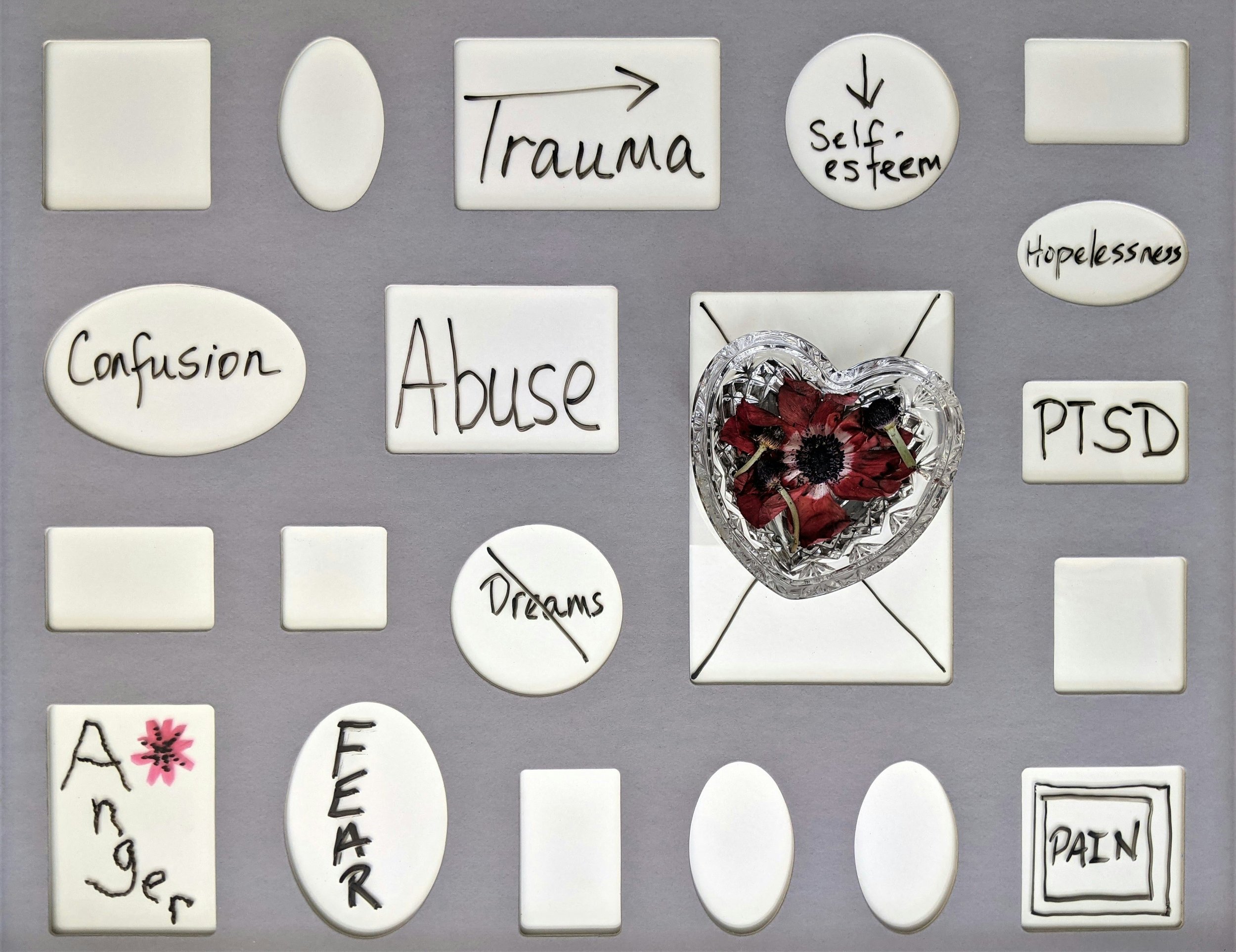
Image courtesy of Susan Wilkerson @ Upsplash.com
It can also come from relationships in adulthood that made you feel powerless, trapped, betrayed, or unsafe. Medical trauma, birth trauma, workplace trauma, religious trauma, racial trauma, relational trauma, and systemic trauma are all real and deeply impactful.
The body doesn’t measure trauma by external standards. The body only knows whether it felt safe or unsafe, connected or alone, seen or invisible.
A more helpful question than “was it bad enough?” is “did I ever feel unsafe, silenced, or invisible”?
If the answer is yes — even sometimes — your experience matters.
If you’ve spent your life telling yourself “it wasn’t that bad,” you may have gotten very good at minimizing your own pain. Trauma work is about finally offering that hurt part of you the acknowledgment it never received.
You Are Not Broken — You Adapted
If there is one message I hope you take away from this guide, it is this: There is nothing wrong with you.
Your responses, your coping strategies, your patterns — they all make sense in the context of what you lived through. Healing isn’t about “fixing” yourself. It’s about understanding yourself, having compassion for your story, and gently creating new pathways toward safety and connection.
And that is entirely possible.
If you are in Seattle and you’ve been looking for grounded, relational, brain-based trauma therapy, know that support exists — and you do not have to do this alone.
Even reading this is a step.
Even feeling curious is a step.
And every step counts.
Why Your Nervous System Matters
Your nervous system is constantly scanning for danger and safety. When it perceives danger and cannot resolve it, it gets “stuck” in survival mode. That can show up as:
Chronic anxiety or hypervigilance
Emotional numbing or dissociation
Depression or hopelessness
Panic attacks or intrusive thoughts
Trouble sleeping or staying asleep
Digestive problems or chronic tension
People-pleasing and fear of conflict
Over-functioning or perfectionism
Shutdown, fatigue, or dissociation
Difficulty trusting yourself or others
A persistent sense of shame or unworthiness
Many people believe these are just “personality traits.” In reality, they are often survival strategies your body developed to keep you safe.
You weren’t “too sensitive.”
You weren’t “too much.”
You were adapting.
Trauma therapy is not about blaming the past. It is about understanding how your system learned to survive and gently teaching it that safety is possible now.
How Trauma Shows Up When You Had Everything You Needed
One of the most painful beliefs people bring into therapy is: I had everything I needed. So what’s wrong with me?
Here is the missing piece: basic physical needs can be met while emotional needs are not.
A child may have food, shelter, and education — and still grow up without emotional attunement, validation, safety, and connection. When feelings aren’t mirrored or welcomed, the child begins to adapt in powerful but costly ways.
They may become:
Highly independent
Hyper-responsible
Invisible
Perfect
Emotionally shut down
Always “doing fine”
As adults, this can look like:
Difficulty resting
Difficulty feeling
Fear of vulnerability
Trouble trusting others
Harsh inner criticism
A sense of emptiness or disconnection
And because there is no obvious story to point to, the person turns that confusion inward and assumes something is wrong with them.
Often, what actually happened is something much kinder and sadder: you adapted to what was missing.
Trauma is not only about what happened to you. It is also deeply about what didn’t happen for you.
Is Neglect Trauma?
Yes. Emotional neglect is a real and powerful form of trauma.
It is often invisible, even to the person living through it. There are no obvious scars, no dramatic moments. There is just a quiet, persistent lack of emotional presence.
No one noticed. No one asked how you felt. No one helped you make sense of your inner world.
And so you learned to survive without asking for anything.
Many people minimize this because “others had it worse.” But trauma is not a competition. Your nervous system does not care how your experience compares to anyone else’s. It only knows what it did or did not receive.
In trauma therapy, we slowly and gently honor those unseen parts of your experience, without blame, and without judgment.
The Seattle Context
There is something uniquely challenging about the emotional climate in Seattle.

Photo courtesy of Jordan Steranka @ Upsplash.com
People move here for opportunity, creativity, and independence. But it is also a city where many people feel alone in the crowd. The pace is fast. The expectations are high. Productivity is often valued more than presence. And for many, family and community are far away.
In my work, I often see patterns of:
Chronic stress and burnout
Perfectionism and imposter syndrome
High-functioning anxiety
Emotional disconnection
Loneliness, even in relationships
A constant feeling of needing to do more or be better
Many people normalize these feelings. They assume this is just what adult life looks like in this tech-heavy city. But often, beneath the surface, these patterns are rooted in unresolved trauma and unmet emotional needs.
If this resonates with you at all, that quiet recognition is important. You don’t need to force change. Just begin by noticing.
You don’t need a dramatic memory, a clear narrative, or a self-diagnosis before reaching out for support. Trauma therapy—especially approaches like EMDR, somatic work, and IFS—can gently help you understand your past without overwhelming you.
In therapy, you might begin to:
Notice how your nervous system reacts to stress or closeness
Understand the ways you coped as a child
See how those strategies show up in your relationships
Build internal safety so you can feel more grounded
Reconnect with feelings you had to shut down
Offer compassion to younger parts of yourself
The goal isn’t to blame anyone.
The goal is to give your nervous system the understanding and support it never had.
What If I Am Afraid of Trauma Therapy?
This is one of the most common — and most honest — questions I receive
Many people worry that if they open the door to trauma, they’ll be overwhelmed, flooded, or destroyed by it. That fear makes sense. It comes from a part of you that has been protecting you for a long time.
A skilled trauma therapist does not rush, push, or overwhelm you. In fact, the first phase of trauma work often involves not digging into the past at all. It involves resourcing, safety-building, nervous system regulation, and strengthening your capacity for support.
You are always in control.
You set the pace.
Your body leads the process.
Trauma therapy is not about reliving the past — it’s about freeing yourself from it.
How Healing Actually Happens
Trauma is stored in the body when the nervous system doesn’t have a chance to fully process an experience. That trapped energy shows up later as anxiety, numbness, panic, shutdown, or chronic tension.
Healing happens when the body begins to recognize that danger has passed.
Through trauma therapy, you learn to:
Regulate your nervous system
Increase your sense of internal safety
Soften old beliefs
Build secure connection
Release stored survival energy
Feel more present, grounded, and whole
You do not have to relive or retell everything for healing to occur. In fact, healing often happens in the quiet moments of safety, not the painful memories.
Different Types of Trauma Therapy in Seattle
Traditional talk therapy can be helpful, but trauma requires something more than insight alone. Trauma lives below conscious thought, in the body and in subcortical parts of the brain that don’t use language the way the thinking mind does. That’s why specific trauma-informed and brain-based approaches can be so powerful.
Here are three of the most effective and respected modalities used in trauma therapy in Seattle and beyond:
EMDR (Eye Movement Desensitization and Reprocessing)
EMDR is one of the most extensively researched and evidence-based trauma treatments in existence. It was developed in the late 1980s by Dr. Francine Shapiro and is now recognized by major organizations, including the World Health Organization (WHO), the American Psychological Association (APA), and the Department of Veterans Affairs.

Photo courtesy of Upsplash.com
Rather than relying on detailed talk or retelling, EMDR uses bilateral stimulation (usually eye movements, tapping, or auditory tones) to help the brain process and integrate traumatic memories that have been “stuck” in a raw, unprocessed form.
During trauma, parts of the brain responsible for logic and time (the prefrontal cortex and hippocampus) go offline, while the emotional and survival centers (the amygdala and brainstem) take over. This is why traumatic memories can feel like they are happening now, even years later.
EMDR helps the brain reprocess these memories so they lose their emotional intensity. The memory becomes something that happened in the past, not something that is still happening in the present.
What the research shows about EMDR:
EMDR has been shown to significantly reduce symptoms of PTSD, anxiety, depression, and dissociation
Many studies demonstrate that clients experience measurable improvement in fewer sessions compared to traditional talk therapy
It is effective for both acute trauma (single-incident events) and complex trauma (chronic, developmental, relational wounds)
Brain imaging studies show actual changes in the way traumatic memories are stored after EMDR treatment
It is effective for adults, adolescents, and children
Clients often report that EMDR doesn’t just help them “understand” their trauma — it helps their body finally let it go.
They may still remember what happened, but they no longer feel trapped inside it.
IFS (Internal Family Systems)
Internal Family Systems (IFS) is a compassionate, non-pathologizing approach that helps clients reconnect with the different “parts” of themselves — especially the parts developed to survive trauma.
We all have parts. Some protect. Some manage. Some hold deep wounds. Instead of trying to get rid of these parts, IFS teaches you how to listen to them, understand their roles, and help them feel safe enough to release their burdens.
At the core of IFS is the belief that every person has a Self — a calm, curious, compassionate inner leader that is not broken, no matter how much pain they have experienced.
IFS doesn’t just heal trauma. It helps people feel whole again.
Somatic Experiencing
Somatic Experiencing is a body-based approach created by Dr. Peter Levine. It focuses on releasing stored survival energy that never had a chance to complete its natural cycle during a traumatic experience.
When animals in the wild escape danger, they shake, tremble, and discharge that energy. Humans are often taught to suppress these instincts. Over time, that unprocessed energy becomes symptoms.
Somatic therapy gently helps the body finish what it started — safely, slowly, and with consent. It works directly with sensation, breath, movement, and nervous system regulation.
For many clients, this is the first time they learn how to feel safe inside their own body again.
Are All Therapists Trauma Therapists?
Not all therapists are specifically trained to treat trauma.
Trauma-informed therapy requires a deep understanding of the nervous system and how overwhelming experiences are stored in the body. It focuses less on “thinking differently” and more on teaching the body that it is safe.
A trauma therapist often works with:
Nervous system regulation
Emotional safety
Attachment and relationship patterns
Somatic awareness
Parts of self
Brain-based and body-based modalities
If you are searching for a trauma therapist in Seattle, you may want to ask a prospective therapist:
What training do you have in trauma treatment?
How do you avoid overwhelming clients?
How do you work with the body, not just the mind?
What happens if I feel shut down or flooded?
A good trauma therapist will prioritize safety above all else.
How to Choose a Trauma Therapist in Seattle

Photo courtesy of Alex Green @ Upsplash.com
Choosing a therapist is a personal process. Practical details matter — such as location, availability, and specialties — but what matters most is how you feel when you connect with them.
Do you feel safe? Do you feel seen? Do you feel respected?
Your body will often answer before your mind does. Listen to that.
When To Reach Out For Trauma Therapy In Seattle
You don’t have to wait until things fall apart to seek support.
Trauma therapy may be helpful if you feel stuck, disconnected, anxious, overwhelmed, numb, or uncertain why you struggle in relationships or with yourself.
If you resonating with these words — that may already be a sign that something inside you is ready for support.
Wrapping It Up
If there is one message I hope you take away from this guide, it is this: There is nothing wrong with you.
Your responses, your coping strategies, your patterns — they all make sense in the context of what you lived through. Healing isn’t about “fixing” yourself. It’s about understanding yourself, having compassion for your story, and gently creating new pathways toward safety and connection.
And that is entirely possible.
If you are in Seattle and you’ve been looking for grounded, relational, brain-based trauma therapy, know that support exists — and you do not have to do this alone.
Even reading this is a step.
Even feeling curious is a step.
And every step counts.